Off-the-shelf ChatGPT wrappers are not Generative AI strategy. At Aavya LabTech, we build production-grade GenAI systems grounded in your proprietary data — RAG pipelines, fine-tuned models, and agentic workflows that automate real business processes and deliver accurate, auditable outputs.
We also build and operate Maitil.AI — our GenAI platform for MSMEs. Talk to us if a white-label or hosted deployment fits your use case.
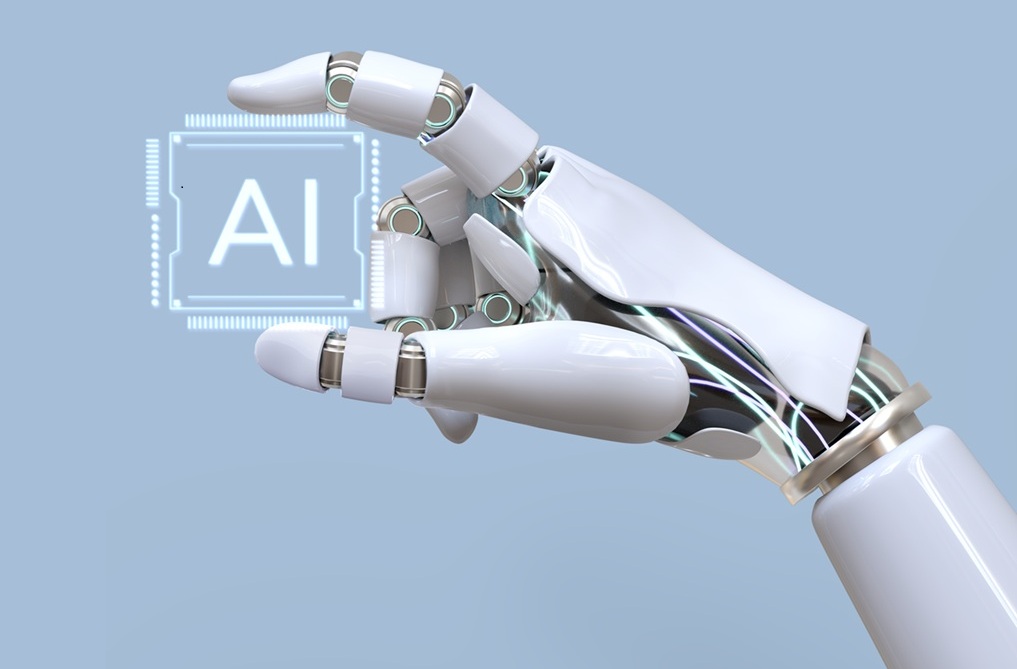
From RAG knowledge systems to autonomous AI agents — we cover the full GenAI engineering stack.
Domain-specific language models fine-tuned on your proprietary data — delivering tone, accuracy, and terminology that off-the-shelf APIs cannot match.
Retrieval-Augmented Generation pipelines that ground AI responses in your documents, databases, and internal knowledge — eliminating hallucination in high-stakes deployments.
Intelligent conversational agents for customer support, internal helpdesks, and guided workflows — with context memory, handoff logic, and multi-channel deployment.
AI pipelines that generate, rewrite, summarise, and classify text at scale — from product descriptions and marketing copy to report synthesis and document extraction.
Multi-step AI agents that plan, reason, and act autonomously — browsing, searching, calling APIs, and completing complex multi-tool tasks without human intervention at each step.
Solutions that combine text, image, and audio understanding — from document OCR and visual QA to voice-to-action pipelines and image-described content generation.
We tailor GenAI solutions to the data, compliance, and workflow requirements of each industry.
A structured methodology from use-case definition to production deployment — with clear milestones and measurable quality gates at every stage.
We identify the highest-ROI GenAI opportunity in your business — defining the task, data sources, success metrics, and risk constraints before any model selection.
We design the data pipeline, retrieval architecture, and model strategy — choosing between RAG, fine-tuning, or agentic patterns based on your requirements.
We evaluate candidate models, design and test prompt strategies, and validate baseline accuracy before committing to an architecture.
We build the full GenAI pipeline — ingestion, chunking, embedding, retrieval, generation, and output validation — with hallucination guardrails and safety filters.
We deploy into your environment (cloud API, on-premise, or VPC) and integrate with your existing systems via webhooks, APIs, or embedded UI components.
Ongoing evaluation of output quality, latency, cost, and drift — with continuous prompt and retrieval tuning to maintain performance as your data evolves.
We're not tied to a single LLM provider. We choose GPT-4, Claude, Gemini, Llama, or Mistral based on what best fits your cost, latency, and data-privacy requirements.
We build for production from day one — with proper error handling, fallback logic, cost controls, output validation, and observability. No demo-ware.
Every RAG system we build includes source attribution, confidence scoring, and guardrail layers — so your AI doesn't confidently invent answers.
For sensitive use cases, we deploy open-source models on your own infrastructure — zero data leaves your environment.
Common questions about building production Generative AI systems for business.
RAG is a technique that grounds an LLM's responses in your specific business data — documents, databases, or knowledge bases — rather than relying solely on the model's training data. This produces accurate, domain-specific answers without hallucination, and allows the AI to stay current as your data changes.
Fine-tuning bakes your data and tone into the model's weights — ideal for style, format, and domain vocabulary. RAG retrieves relevant context at inference time — ideal for factual accuracy, large knowledge bases, and frequently-changing data. Most production GenAI systems use both in combination.
We work with GPT-4o and GPT-4 Turbo (OpenAI), Claude 3 Opus and Sonnet (Anthropic), Gemini 1.5 Pro (Google), and open-source models including Llama 3, Mistral, and Falcon — choosing the right model based on cost, latency, data privacy, and task requirements.
A focused GenAI integration — such as an internal knowledge assistant or a customer-facing chatbot — can be designed, built, and deployed in 4–8 weeks. More complex agentic workflows or multi-model production systems typically take 8–16 weeks depending on data complexity and integration depth.
We evaluate privacy requirements at the architecture stage — choosing on-premise, VPC-deployed, or API-based models based on your data classification. For sensitive data, we use private deployments of open-source models (Llama 3, Mistral) that never send data to third-party APIs.
Let's identify the right use case — the one with the highest ROI and lowest risk — and build a roadmap to get it live. Talk to our GenAI engineers today, no obligation.
Book a Free GenAI Consultation